Review by Simon Jenner, August 6 2026
★ ★ ★ ★ (★)
It’s not always the fate of operas being only as good as the libretti. Think Zauberflote. But Weber was a bit unlucky. After Der Freischutz of 1821 Euryanthe in 1823 was hopeless romantic medieval twaddle by comparison with the gritty demonic world of 1650. Surely though the London commission for Oberon for the 1826 season had a rather promising dramaturgy attached. Even if it wasn’t exactly Shakespeare. Well no. Not quite. But.
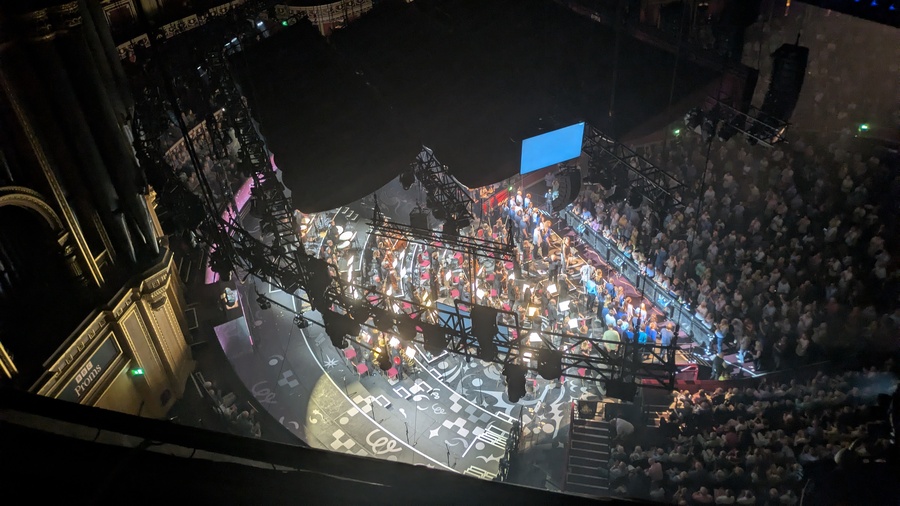
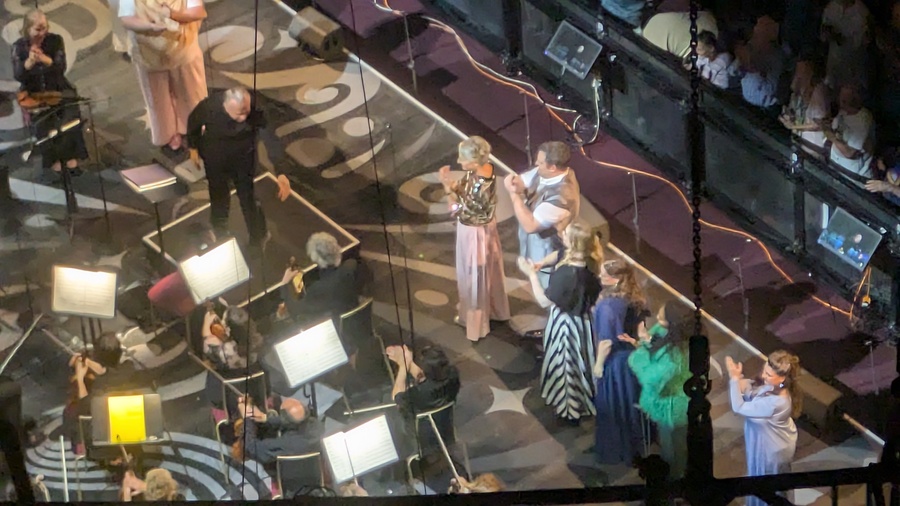
Weber’s Oberon comes to the Proms in its bicentenary year, which year also saw the death of the composer as he prepared to return from London, on 5th June 1826. Conducted by Sir Mark Elder with soloists led by a ringing Nicky Spence as Oberon they’re accompanied by the Orchestre Revolutionaire et Romantique and Monteverdi Choir for a one-off semi-staged performance.
Sonically those wondrous wound horns, gut strings and so much else are a revolution. The blend of solo horn and cello for instance shows Weber in a new light as master of certain orchestral sororities, and where Wagner filched some if his ideas: as for once he generously acknowledged.
The plot – an evisceration of the Dream – is easily dispensed with: if you leave its windings to the horns. Oberon and Titania are estranged as they can’t agree on whether men or women are more faithful. So far so Euryanthe in feel. Puck (J’nsi Bridges a sharp comic mezzo) spies out sone possibilities for Oberon.
All this is punctuated by Tamsin Grieg as narrator. Timothy Knapman supplies not only the English translation produced on those ever-distant subtitles, but the delicious Roald Dahl verses where Greig knows just how to score a laugh. Some of it is pure limerick territory.
So for Oberon to consider, there’s Sir Huon if Bordeaux also a Duke at Charlemagne’s Court, so we’re a few centuries on from Athens. John Finding is an appropriate rich heldentenor with a quick light alertness when required. He’s to be sent on a quest – where else – where he has to kill a man affianced to the sultans very reluctant daughter Reiza (Jennifer Davis who’s the showstopper here). David sings two great arias in Act Two. One about being overwhelmed by the dread ocean which prefigured Senta in The Flying Dutchman; and another on what looks like permanent separation, with delicious low horns and strings in his heady accompaniment. It’s where rousing themes familiar from the overture emerge.
To help things along Oberon has sent her a sexy dream of Sir Huon, and gifted the knight some magic, mainly a horn to blow on at need
Well that goes well. Accompanied by faithful retainers – Shersanin (Yannick made us a fine varied baritone) and Fatima Rachael Wilson who gets a soubrette plus of a mezzo coloratura role) the pair fall for each other.
Their escape though is follows by pirates and separation. And another vizier and his slinky wife, each having designs on the lovers. At one absurd moment Fatima has to point out that the gardener-disguised Sir Huon is being pelted with flowers like Rosemary, pansies and forget-me-nots because it’s a code, stupid. He’s a bit at a loss without his horn though. Luckily Shersanin steps on it in the bushes. Cue end of sort as lovers are wafted back to France and Oberon and his silent offstage Queen – Greig stands in – are reunited.
The storm lighting was particularly effective, flickering round the hall; and the whole orchestral stage was kept dimmed with a few lights. The dark was light enough. The ORR under Elder acquit themselves superbly and make an outstanding case for period performance.
O for a muse of fire to brighten Weber’s so dramatic invention. The music is more than fine enough. It often has greatness stamped on it, and much of it is brushed with greatness too. But it’s a picaresque piece. Eminently worth hearing though like Euryanthe never likely to become standard repertoire.
Yet is gleaning orchestral interludes, the gossamer proto-Mendelssohn – his own Dream music Overture was written that year – and the fairy chorus are quite magical. And the often scurrying Monteverdi Choir do them full justice too: in casual clothing as that fairy chorus, and Sir Huon-seducing dancers.
But one thing Euryanthe did manage, and which Oberon capitalised on. Women’s suffering was as much party of romantic patriarchy as sexual fidelity: a kind of flip-side test. It’s one thing its librettist and otherwise-gifted Helmina von Chézy really struck. However exploring this in Euryanthe opened up a vein Weber developed in Oberon. And something Wagner took a hint from in his far more active and substantial heroines, starting with Senta, who’s prefigured here – if only musically – in Reiza. It’s a far cry from the machismo world of Der Freischutz with its dark bro-bonding somewhere north of American Psycho.
Who knows what Weber might have developed had he lived beyond his 40th year and written with better libretti. We know Mozart died at 35 with six or possibly seven operatic masterpieces. Yet Wagner at 39 dying say in 1852 would seem a figure scarcely greater than Weber.
It’s frustrating. But all the more important to celebrate and re-examine what we have in Weber’s shadowy last two operas. They certainly point to Wagner, and support his statement: that he’d never have written had Weber not have. There are worse fates than to be a bridge or inspiration. But Weber’s greatness – wider than his operas – has been rather underplayed in his bicentenary year in the UK, the place which finally killed him off.
Photo Credits: Simon Jenner